When Matter Begins to Listen
Most exhibitions ask you to look. WITNESS, Monad Origin's solo show at DISTILL during Berlin Art Week, asked something else entirely: what happens when sound stops being something you hear, and becomes something you can see, touch, even sit in.
Berlin Art Week is, each September, the city's largest gathering of contemporary art — five days of exhibitions, performances, and talks marking the start of Berlin's cultural autumn. Among the dozens of shows scattered across the city, WITNESS stood out for asking a genuinely strange question: what happens when matter begins to listen?
Monad Origin — founded by Nick Peeters and Anujin Byambaa, and known until recently as RBG18 — doesn't design in the traditional sense. Their practice translates raw sound frequencies directly into physical form: a chair, a bowl, a vessel, shaped not by a designer's hand but by the natural, geometric containment properties of sound waves themselves. Where a chair curves, where a bowl dips — none of it is decided in advance. It's discovered, frequency by frequency, as if the object had always existed and simply needed the right sound to reveal it. Since 2025, that practice has carried the studio from Dubai and Barcelona to Brussels, Antwerp, Madrid, and Milan — and now, Berlin.
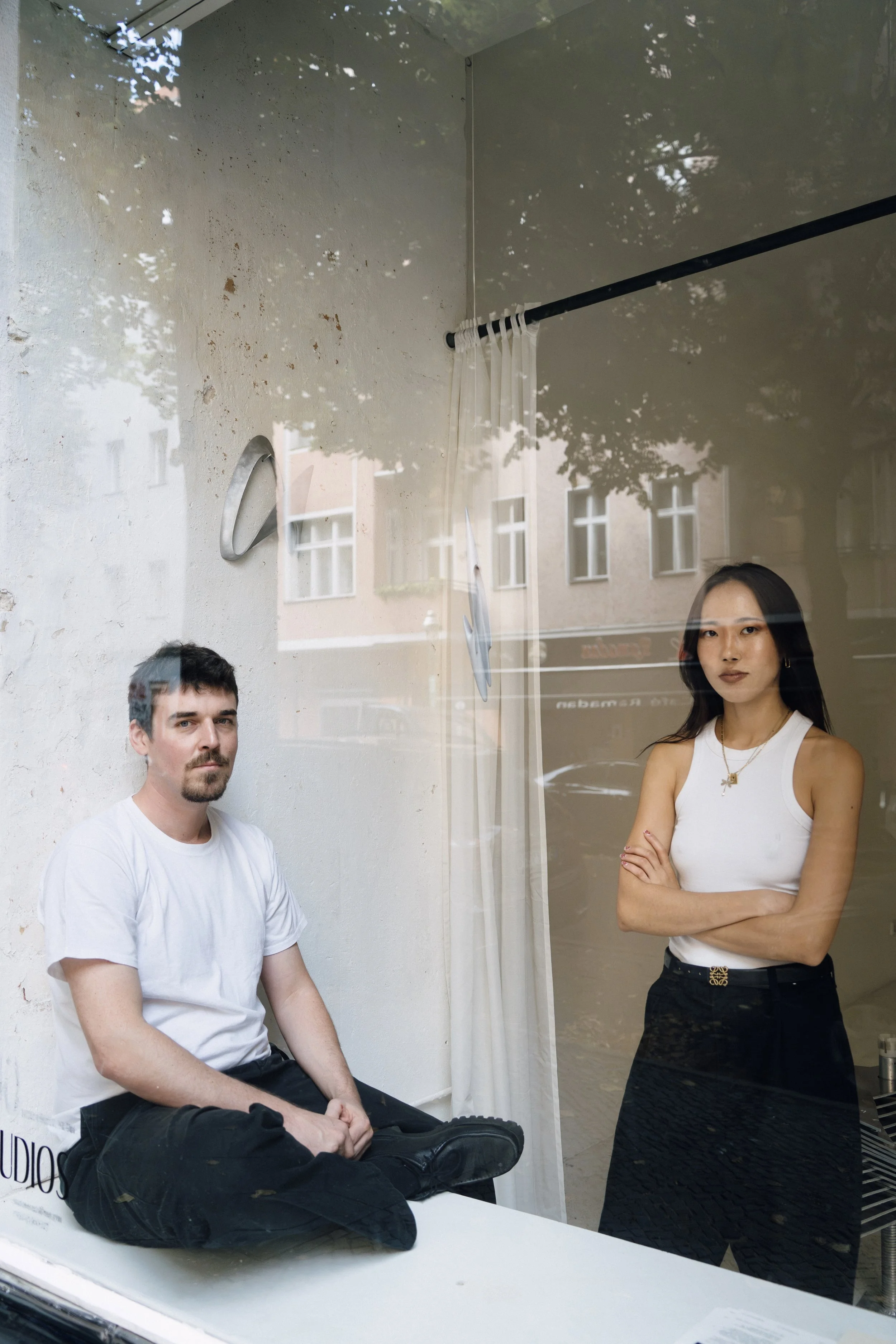
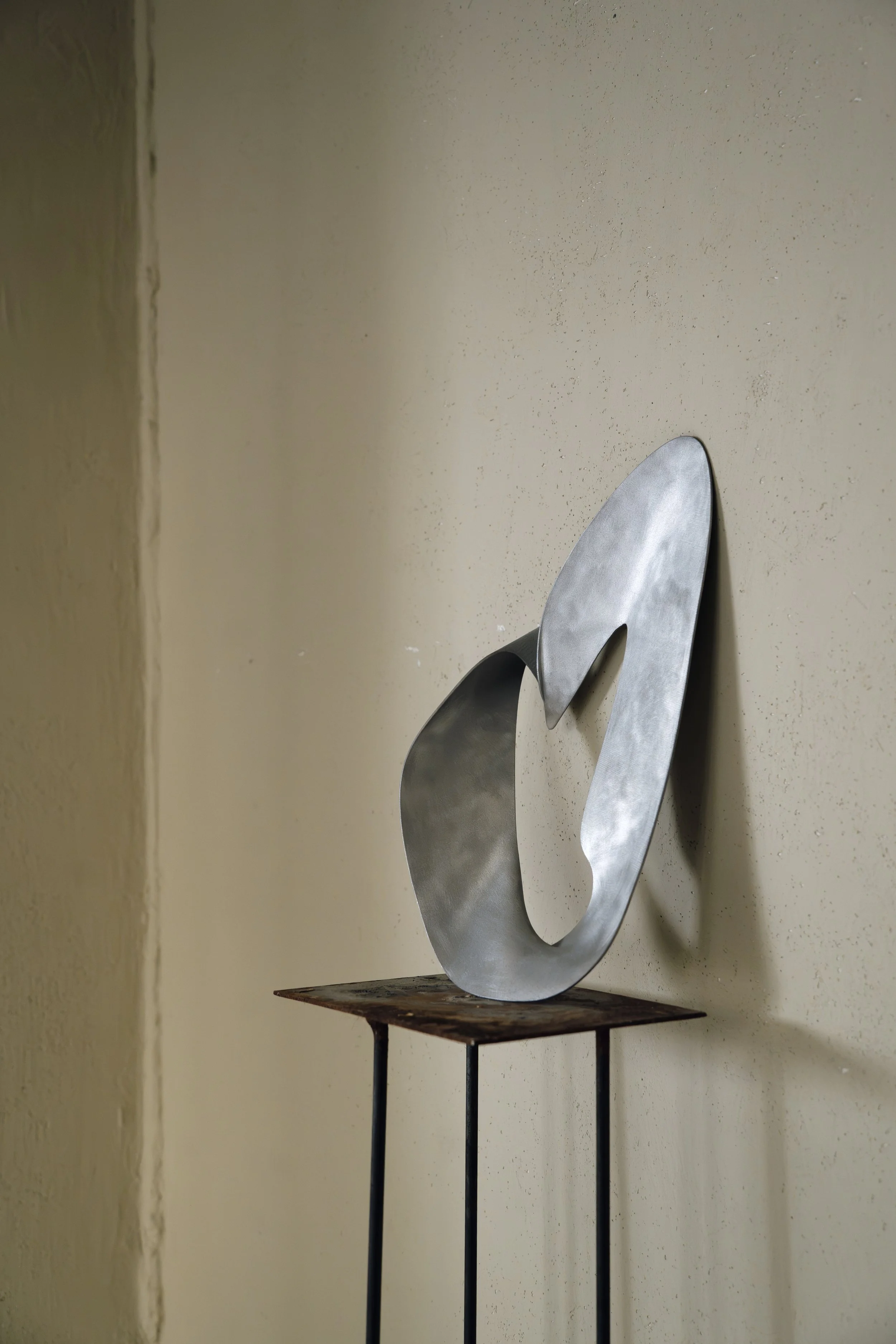
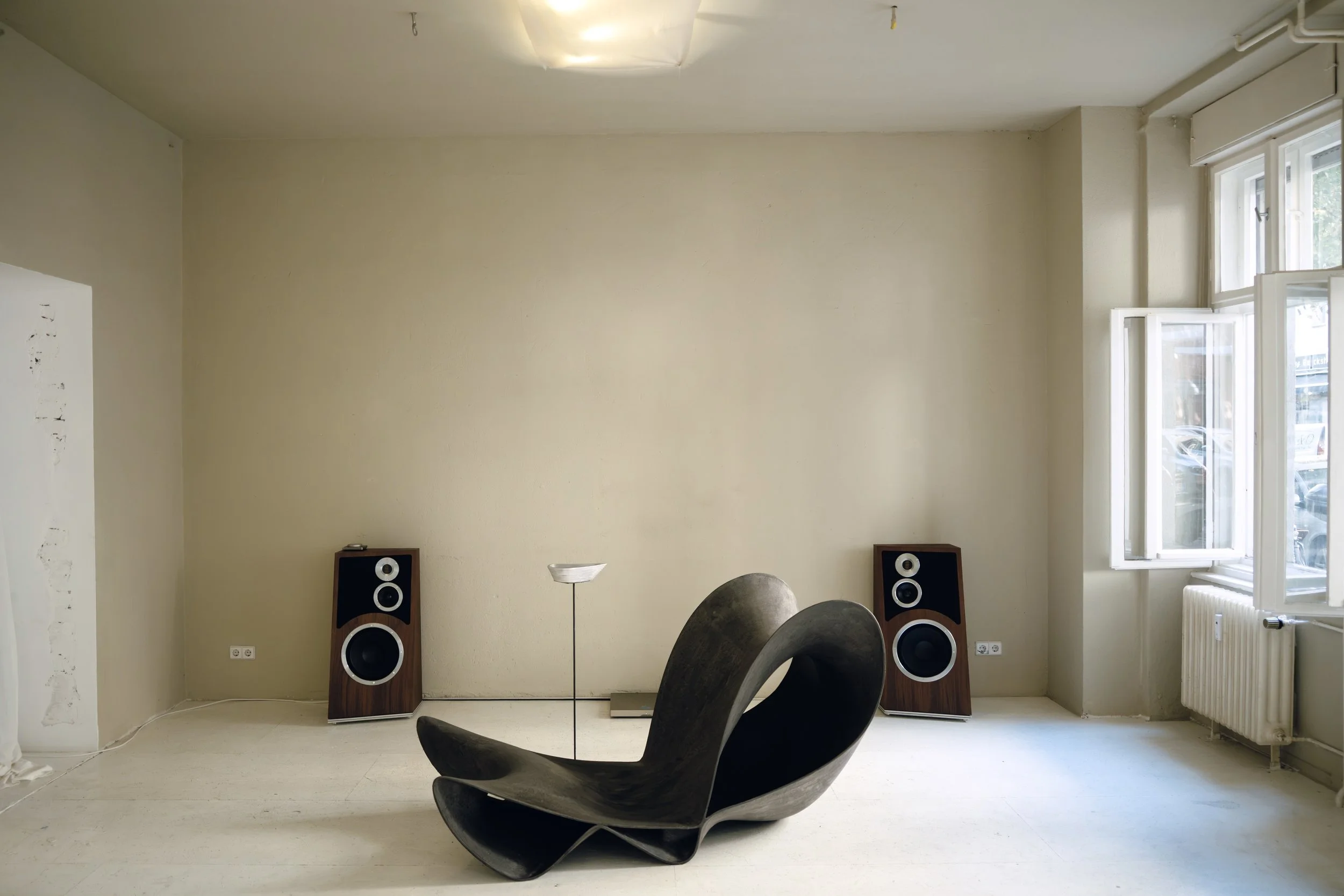
At DISTILL — an intimate loft space on Donaustraße in Neukölln, curated by Marie Polo as a home for contemporary art that feels close and unfiltered rather than distant — that philosophy filled the room. A chair shaped entirely by a single sound frequency sat beside an aluminium form resembling an unidentified vessel. A spherical architectural model became a chamber for witnessing slow-moving laser forms and their fading traces. Elsewhere, low, meditative frequencies moved through the space while sound, captured live, was translated in real time into light and movement. Some pieces remained fixed for the five days of the exhibition. Others existed only for the length of a single evening, never to be repeated in quite the same way. Object and event, stillness and vibration, side by side.
Beyond the pieces on display, Monad Origin offered something rarer still: visitors could commission a one-of-a-kind object generated from a sound of personal significance — a voice, a memory, a particular moment — translated through the studio's system into a form that exists nowhere else, and never will again. Not customisation. A personal frequency, made physical.
HIFILORD was invited to bring the sound system that carried the entire exhibition. Not as a technical afterthought tucked into a corner, but as part of the same conviction Monad Origin builds their whole practice on: that sound, taken seriously, can shape a room as much as anything placed inside it. It's the reason the collaboration made sense almost immediately — two disciplines, one working in raw frequency, the other in curated listening, both arriving at the same idea from opposite directions.
It's also the same instinct that has quietly carried HIFILORD beyond its own showroom over the past year — into listening dinners, late-night sessions behind the decks, and now, an art gallery in Neukölln during one of Europe's most closely watched art weeks. Each of these rooms has looked nothing like the last. What hasn't changed is the belief underneath them: that attention, given the right space, changes how a room feels — and that some things are worth building slowly, one room at a time.
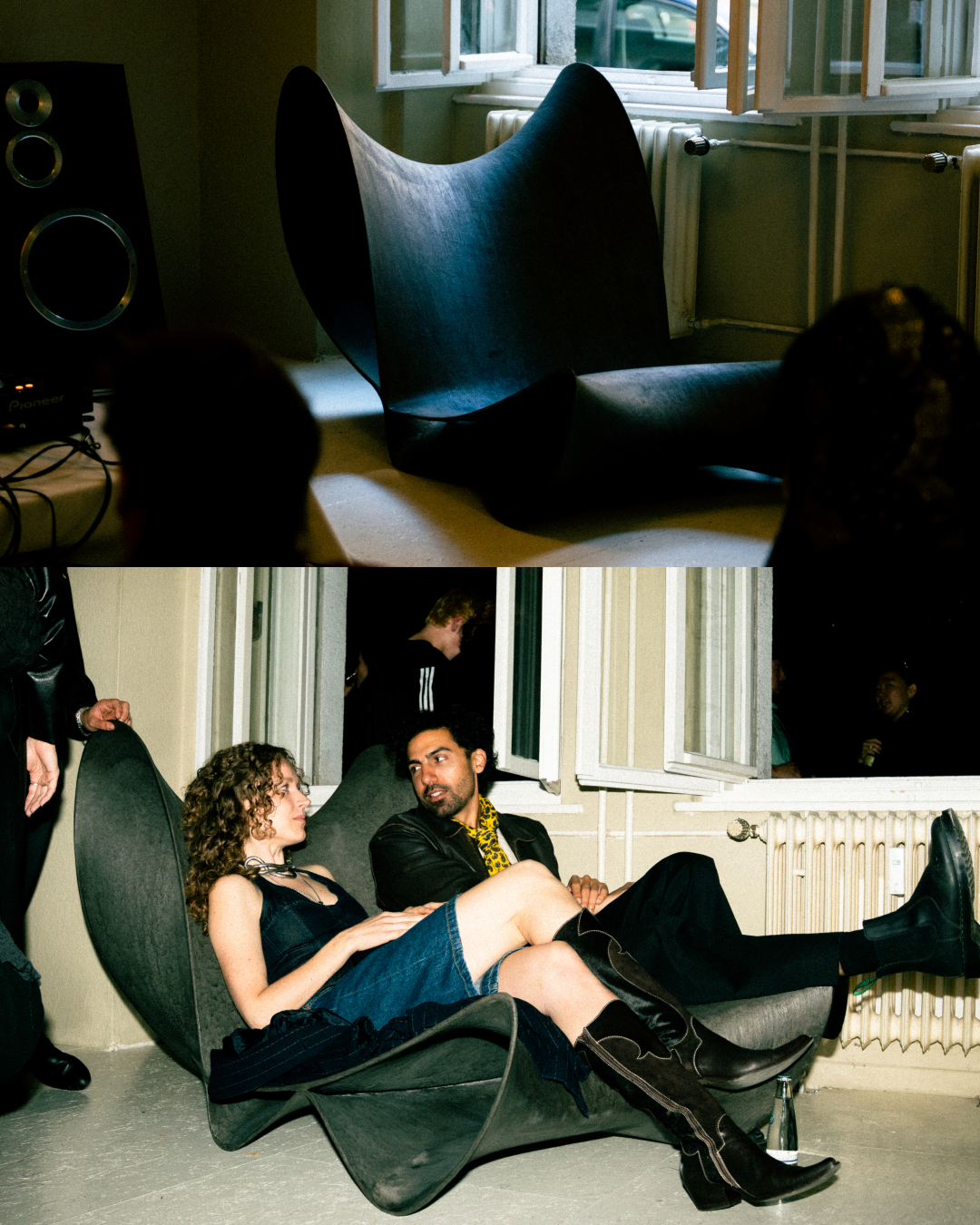

Berlin, in that sense, felt less like a leap than a continuation. Two disciplines, sound made physical and sound made experience, sharing the same room for the first time.
We suspect it won't be the last.
With thanks toDISTILL and VIBRATION Berlin, for the space and the vision behind it.
Photography by Yi Hui Zhao (exhibition) and David Moss (opening night).